Autochthonous plants
**Olive **The olive, locally known as ulika (Latin name Olea europaea) has dark green to black fruit which is the main source of olive oil, a welcome guest on tables of the Empire, as it is today in restaurants and every home. Owing to the exceptional quality, olives have been grown in the area of South Istria ever since Roman times. To enable the transport of olive oil to all Mediterranean countries, Fažana was an important site of amphorae production. Indigenous varieties in the olive groves of Fažana: buža, karbonaca and leccino.
**Rosemary **Rosemary is a Mediterranean evergreen shrub whose name derives from the Latin name rosmarinus meaning “dew of the sea”. It is cultivated as a decorative bush, aromatic herb and for the production of essential oils. It is an excellent herb, its best culinary use is the top of a fresh rosemary twig, as well as finely chopped dried leaves.
**Laurel **Laurel (Latin name Laurus nobilis) is a Mediterranean evergreen shrub or tree reaching up to 15 m tall. Laurel leaves and flowers have long since been used as a spice to flavor food with their strong aroma. Roman emperors – Caesars wore laurel wreaths as a symbol of victory and immortality.
**Cork oak **Cork oak (Latin name Quercus suber) is a native to the west Mediterranean. There are a few such specimens on the Dalmatian islands and South Istria. Its fruit is the acorn. After 25 years of growth the bark is stripped and used for the production of cork bottle stoppers and šuri – round fishing net floats that prevent nets from sinking.
**Spanish broom **Spanish broom, locally known as žuka (Latin name Spartium junceum) is a shrub that is native to the western Mediterranean, with yellow flowers that blossom in the second part of spring. Its branches are woody and very hard to break. It is best cultivated in areas with full sun. In the mid 20th century material for work clothes, doormats and different kinds of rope were made in the factory for processing Spanish broom.
✨Similar content

Historical Roots of Olive Growing in Fažana
Where tradition, nature, and the story of olive oil come to life

San Lorenzo Olive Grove – A Legacy of Centuries-Old Olive Cultivation
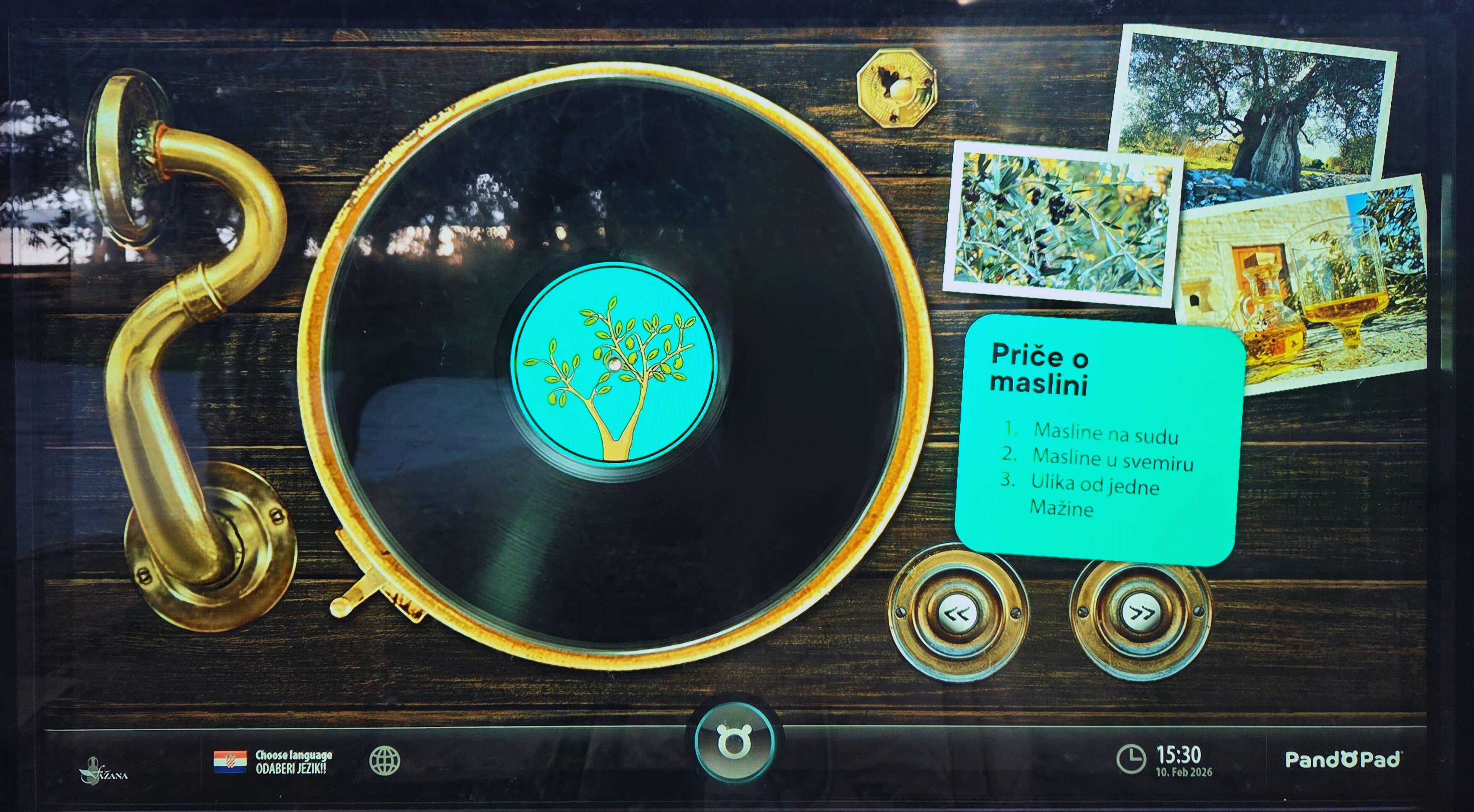
Audio stories about Fažana’s olives

Life in the Olive Grove
An olive grove is not just a place of cultivation – it is a space where nature and tradition exist in harmony. Here, rich biodiversity, native and rare olive cultivars, and daily work guided by the rhythm of the seasons come together.

Olives in space
